

Movies have been the undisputed king of entertainment in India, especially in its post-independence era. There has always been competition – from circus and stage plays to television and even cricket. But Bollywood has largely been able to rule the hearts of Indian audiences because of the long-standing prevalence of big name artists, bigger budgets and its wide reach. With closer to 1,000 new movies being produced every year, Bollywood has always remained an active part of the pop culture.

India has a rich and long history of movie making. Being a film and history enthusiast, I have always found it interesting to study the evolution of cinema and how this medium has survived great wars and bridged political differences. Raj Kapoor – the master showman – was immensely popular in Russia and remains so to date; Aamir Khan’s movies are blockbuster hits in China, a country against whom India has fought a bloody war and is presently engaged in multiple territorial disputes along its North-Eastern border; and Naatu Naatu, a catchy song with relatively lesser-known artists from Southern India, had Hollywood dancing to its tune at the 2023 Oscars. Given the considerable timeline of over 100 years, I have broken down this topic into two parts and six eras. This first post will cover the first three eras – from its humble beginnings in 1913 to the golden era of music in 1972. The next part will take us from the rise of action films to the present day. I do not aspire to cover every aspect of Indian cinema in these posts. The aim is to simply to recognize the contributions of the legends of the film industry and add flavor with some insights.
1913 – 1947: The Pre-Independence Era
In 1913, Dadasaheb Phalke, the father of Indian cinema, made Raja Harishchandra in his native Marathi language. This is widely considered to be the first feature length movie in India. A printing press owner and a small-time magician himself, he was mesmerized with the on-screen magic after watching a movie at a theater in Mumbai. He had found his life’s calling that afternoon. But Mr. Phalke was a man of modest means. With his and his family’s life insurance policies as collateral, he secured a loan which was just enough to travel to London so that he could learn the art of movie-making and secure the necessary camera and film equipment. But he needed more money to actually get started, so he made a short one minute film that captured the growth of a plant over a month – from a seed to a creeper – and showed it to his potential sponsors. The journey of this pioneer and his struggles have been documented in the Marathi biopic film Harishchandrachi Factory (2009).
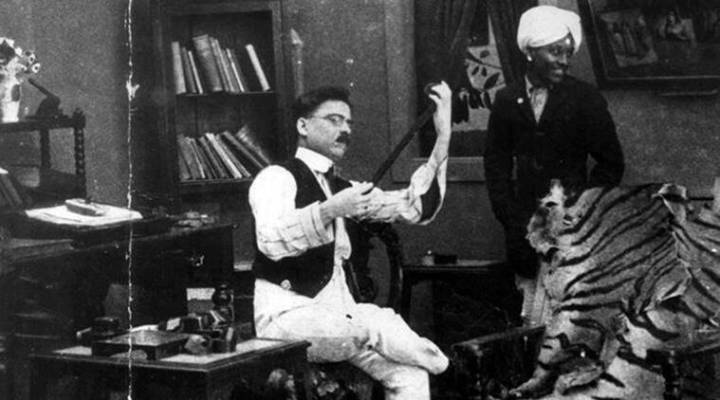
Mr. Phalke went on to make about 100 feature length films over the next two decades. Very soon, businessmen all over India picked up on this art form and theaters and movie studios sprouted throughout the country. But the nation faced turbulent times over the next 3 decades with an intensifying freedom struggle. Since anything related to the independence movement was banned from being screened by the British Raj, the movies during the 1930s and early 1940s commonly depicted stories from Indian mythology and well-known characters from the famous epics ‘Ramayana’ or ‘Mahabharata’. Alternatively, they portrayed the lives of saints and exploits of kings and emperors. By telling these well-known stories through the medium of movies, the focus was mainly on promoting good moral values and a sense of national pride.
After a long struggle, India finally won its independence from the British in 1947 and the country and its movie industry was ready to march into a new era.
1950s: Patriotic And Socialist Wave

During the 1950s – the first decade post independence, Bollywood saw the rise of its first triumvirate in the form of Dilip Kumar – Raj Kapoor – Dev Anand. Patriotism and the socialist movement was still fresh in the minds of the people and it reflected in the movies of Raj Kapoor1 [Awaara (1951), Shree 420 (1955)], and Dilip Kumar [Naya Daur (1957) and Ganga Jumna (1961)]. Mother India (1957) featuring Nargis Dutt – became the first Indian movie to be nominated for Oscars. All these movies featured the trials and tribulations of farmers or villagers who represented that vast majority of the population. In stark contrast to these socially charged dramas however, the films of Dev Anand were like a breath of fresh air. Instead of social injustice and struggles of the lower class, the audience were treated to subtle romance sprinkled with light humor. It was also around this time when music started becoming an integral part of Indian cinema. Lyricists such as Majrooh Sultanpuri and musicians such as S. D. Burman & O. P. Nayyar gave us hundreds of melodious songs throughout the decade. O. P. Nayyar is especially remembered for his signature ‘tanga‘ (horse drawn carriage) beat that was used in his songs.

There are a couple of names from this era with whom most Westerners are familiar. The first is Satyajit Ray. The legendary Bengali director is most famous for his Apu trilogy [Pather Panchali (1955), Aparajito (1956) and Apur Sansar (1959)]. In addition, several of his other work like Mahanagar (1963) and Charulata (1964) have received the Criterion Collection treatment as well. Change and progress and its influence on people and society was one of the predominant theme in his movies, especially in the Apu trilogy. Along with Akira Kurosawa, he was instrumental in making Asian cinema popular in the West. He was presented an honorary Oscar award in 1992 for lifetime achievement in filmmaking.

Another famous name from this era is Guru Dutt, who I liken to be the Orson Welles of India. Similar to Welles, this multi-talented auteur acted in, directed and even produced many of his own films. He was well known for his serious and melancholy movies like Pyaasa (1957) and Kaagaz Ke Phool (1959) and Sahib, Bibi Aur Ghulam (1962). He also made commercial blockbusters and light comedy or noir films like Mr. And Mrs. 55 (1955) and C.I.D (1956). Mr. Dutt was known for his inventive work behind the camera. His early films Baazi (1951) and Jaal (1952) introduced the noir genre to the Indian audience. Kaagaz Ke Phool, India’s first cinemascope movie, was his most ambitious project as a director but unfortunately it bombed at the box office. This heavy financial loss forced him to give up direction going forward and just stick to acting. His masterpiece Pyaasa, features on Time Magazine’s list of All-TIME Best 100 movies.
1960 – 1973: The Golden Era Of Music

As things started to settle down and India started coming out of the shadows of the British Raj, movies took on a different role. Having come a long way from its virtuous beginnings, cinema now evolved into a source of pure entertainment. The love for God and country was replaced by the love for the opposite sex. A demographic that was slowly but surely moving from the villages to the cities in search of better paying jobs saw Bollywood movies as a launchpad for its dreams. A generation of moviegoers grew up watching Shammi Kapoor and Sharmila Tagore romancing each other from Kashmir to Paris while another watched the rise of Bollywood’s first superstar Rajesh Khanna. Shammi Kapoor2, in his own charming way, brought the swinging 60s culture to India. Before him, the male actors just stood still in the songs while the female leads danced or sang around them. But Mr. Kapoor ushered in a new wave with his high octane energy while sliding down snow laden slopes in Kashmir or hanging from a gondola in the Swiss Alps. More on Rajesh Khanna later.
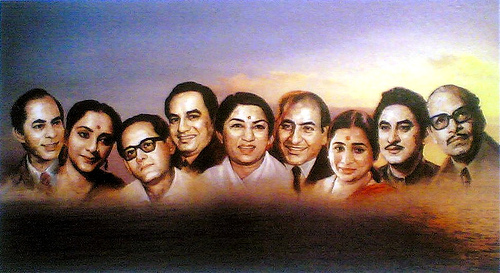
The 1960s also saw the movies transition from black & white into striking Eastmancolor, signaling the advent of the golden era of Bollywood musicals. Some of the greatest lyricists (Shailendra, Gulzar), background music directors (Naushad, Shankar–Jaikishan) and singers (Lata Mangeshkar, Mohammad Rafi) contributed thousands of melodious songs over the next two decades. The songs from the late ’50s to mid ’70s still play on numerous radio and TV stations all over the country and their cover versions are a staple at any music festival. Since television was practically non-existent during this era, people gathered around their radio sets once a week to listen to the iconic voice of Ameen Sayani introduce their favorite songs on the popular show ‘Binaca Geetmala’. These masterful compositions, with their meaningful lyrics and pleasing vocals, revved up tremendous excitement around the movies – so much so that audience flocked to the theaters just to see and experience their favorite songs on the big screen.
This era gave us two of the best actor-singer pairs of all time. In the early 60s, Shammi Kapoor and Mohammad Rafi, who was one of the most versatile singers ever, featured in memorable songs like ‘Ehsaan Tera Hoga Mujhpar‘, ‘Badan Pe Sitare‘, ‘Raat Ke Humsafar‘, ‘O Haseena Zulfowali‘ and many more. Similarly, the latter half of the 60s and early 70s saw the rise of Rajesh Khanna & Kishore Kumar, an accomplished singer and actor in his own right. Several of Mr. Khanna’s biggest hits featured songs in the voice of Kishore Kumar including songs like ‘Mere Sapno Ki Rani‘, ‘O Mere Dil Ke Chain‘, ‘Roop Tera Mastana‘3, ‘ and ‘Wo Shaam Kuch Ajeeb Thi‘.

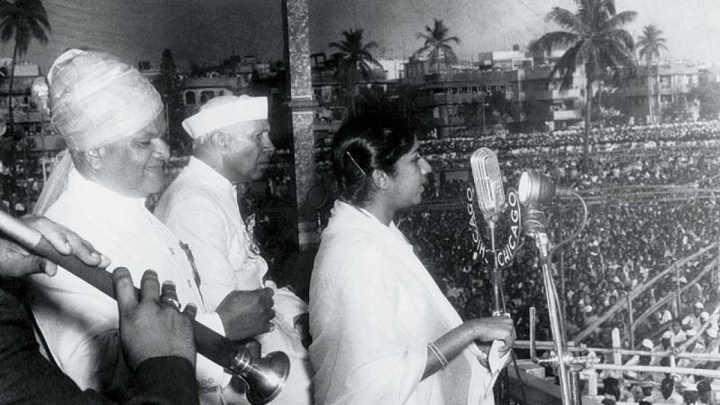
As for the female singers, this era and the next was dominated by the two legends of India, who also happen to be sisters – Lata Mangeshkar and Asha Bhosle. Lata Mangeshkar, the voice of India, has sang approximately 25,000 songs in several languages over her career that spanned almost 7 decades. It is impossible to single out a particular song of hers to highlight, but perhaps ‘Ae Mere Watan Ke Logon‘ would be my pick. Her moving tribute to the fallen Indian soldiers in the 1962 war against China brought Prime Minister Nehru to tears. Fondly called ‘didi‘ (older sister) by the people around her, it was her insistence and her fight against the record companies that led to the singers getting their rightful dues in the form of royalties and screen credit in movies. She was honored with ‘Bharat Ratna’, India’s highest civilian award, in 2001. Her equally talented sister Asha Bhosle is a legend in her own right. She is blessed with a voice that is suited to a wide range of songs from Urdu poetry to Western style cabarets, and has made an indelible mark on the hearts of Indian moviegoers. She was awarded the ‘Padma Vibhushan’ (India’s second highest civilian award) for her achievements in 2008.
I feel that this golden era for music was a turning point for cinema in more than one ways – my biggest grievance being that while music thrived, the scripts suffered. While people lining up at the cinema halls may be a great sign for the movie industry, the underlying signal that the makers took was one dimensional – As long as we have a few great songs in the movie, people will come. So naturally, the stories became monotonous. During the 60s, Shammi Kapoor and Joy Mukherjee had Rajendra Nath as their wingman while chasing girls. The change of decade brought new stars like Rajesh Khanna and Jeetendra along with a new wingman, Junior Mehmood. The stories remained the same, the lines outside the movie theaters grew longer.
One might wonder how long could this trend last. But Bollywood producers had a genius trick up their sleeves – foreign locations. The trend of basing a movie, or even just a song, in some international tourist destination is nothing new. From Love In Tokyo (1966) and the aforementioned An Evening In Paris (1967) to relatively recent blockbusters like Dilwale Dulhaniya Le Jayenge (1995) and Salaam Namaste (2005), foreign locations have been a fixture in movies, albeit for different reasons. Initially, it was to satisfy the curiosity of the Indian audience who seldom traveled abroad. The movies acted as a gateway to faraway lands such as Paris and Tokyo. The 1990s saw more and more Indians settling down in Europe and America. So the movies of this era catered to the need of this diaspora to be tethered to their roots. The famous producer / director Yash Chopra is single handedly credited with the booming Indian tourism in Switzerland4. They even have a statue of him in Interlaken. And finally, seeing this tourism bump, some of the lesser known tourist destinations have started sponsoring or giving concessions to Indian movies in order to promote their own local tourist attractions (see Prague, Spain and Croatia).

But before jumping too far ahead, we need to take a look at one of Bollywood’s most iconic name and its biggest superstar – Amitabh Bachchan – who single-handedly defined the next era. We will turn that corner in the next part.
1, 2 Raj Kapoor, son of Prithviraaj Kapoor (an actor himself), founded the RK Films studio in Mumbai. We can consider the Kapoor family as the first family of Bollywood. His brothers, Shammi and Shashi Kapoor, two of three sons (Randhir and Rishi), daughter-in-laws Babita (married to Randheer) and Neetu Singh (married to Rishi) and grand-children Karishma, Kareena and Ranbir all have had successful careers in Bollywood.
3 Roop Tera Mastana made history as the first single-take shot song in Bollywood.
4 Several Yash Chopra blockbusters like Chandni (1989), Darr (1993), Dilwale Dulhania Le Jayenge (1995), were shot at least partly in the beautiful Bernese-Oberland region of Switzerland.
 Lights Camera Action
Leave a comment