
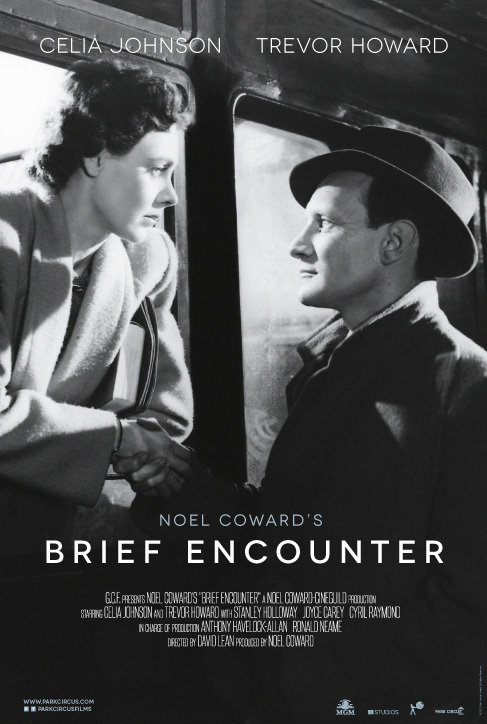
One of the world’s premier directors, David Lean is well-known for his critically acclaimed hits such as The Bridge On The River Kwai (1957), Lawrence Of Arabia (1962) and Doctor Zhivago (1962). Brief Encounter is one of his earlier movies, when he was not yet an established name. Running at just 86 minutes, it is nowhere close to his more famous epics in scope. It is however a subtle romance and a fascinating character study, signaling the arrival of the legendary filmmaker onto the world stage. As a testament to its greatness, this movie was ranked second on a list of top 100 British films of the 20th century published by the British Film Institute (BFI).
Set over just six weeks, Brief Encounter tells the tale of a married woman (Laura) and man (Alec) who fall in love with each other. These are perfectly ordinary individuals leading a perfectly content life in suburban England. With loving families and caring spouses, things seem to be going well and life is on auto-pilot for both. But destiny has other things in store for them. As Laura’s character says in the movie, she is not prepared for such violent things as love. Narrated from her point of view, we see how this whirlwind romance takes her on an emotional roller coaster and throws her mundane life in chaos.
Comments:
The movie opens with a shot of trains passing by at the not-so-busy Milford Junction on a Thursday evening. The smoke bellowing from the steam engines and mixing with the dense fog, the sparse crowd at the platform and a station master who’s friendly with the café staff sets the mood and foretells an intimate setting. We are taken inside the café where Laura and Alec are in the midst of saying their goodbyes to each other – possibly for the final time. We then follow a distraught Laura to her home in the suburb of Ketchworth where she lives with her husband and their two children. Here, she reminisces about the events of the last few weeks and narrates her story to us in form of a flashback.

We find out that the café at Milford Junction was coincidentally the setting for their very first chance encounter on another Thursday six weeks ago. On that occasion Alec, who’s a doctor by profession, helps Laura clear up some grit that she’s got in her eye due to a passing train. Their individual schedules take them to Milford every Thursday and they end up meeting each other during the next few weeks. Over some meals, a couple of movies and walks around the town, both Laura and Alec who are repressed in their own way at home, get closer to each other and fall in love. In spite of their denial of their own feelings, they both eagerly look forward to these weekly Thursday meetings where they can escape from their otherwise drab lives.
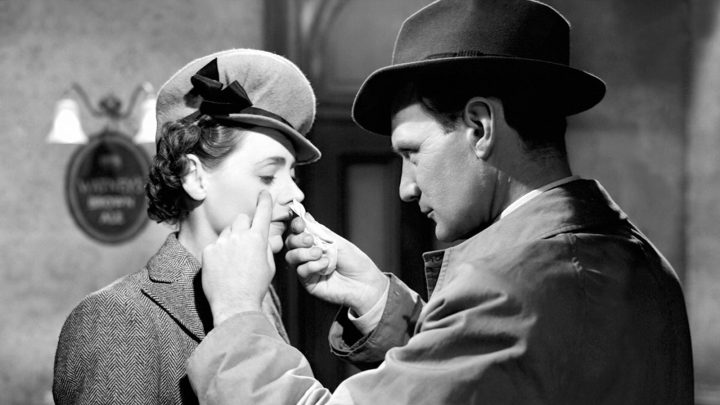
Milford station acts as a portal between Laura’s reality and the alternate life she dreams of with Alec. No matter how much joy she feels with him during their time spent together, her life awaits her at home in Ketchworth. Every week, it is here at Milford Junction where their paths must separate. For Laura, the announcement of the 5.40 train to Ketchworth must feel like an alarm clock that goes off and wakes one up from a pleasant dream.
I loved Laura’s narration throughout the movie. It is real and honest and precisely conveys her conflicting emotions. From her skewed sense of fairness where she holds herself responsible for her family’s misfortune to her wishing ill of someone which is very out-of-character for her, Laura’s inner thoughts portray a very human picture of her. Specifically at the end when she says ‘I would like to believe it was the thought of my husband and kids, but it wasn’t’. This is a very brutal but honest assessment coming from the character of a housewife like Laura.

Speaking of the ending, it is a good loopback to the opening scene from a different perspective. As viewers, we definitely have a feeling of something being amiss but it is only after experiencing the events from Laura’s point of view that we realize the full gravity and impact of the situation.
Cast and Crew:
Celia Johnson plays the role of the housewife Laura and she conveys the emotional conflict of her character really well. On one hand, Laura seemingly has everything that she could ask for – kids, a caring husband and a good social circle. But she is willing to risk it all for a life with a stranger which she knows is impossible to have. Her feeling of guilt for cheating on her husband contradicts with her feeling of being alive and wanted around Alec. Ms. Johnson manages to show the plight of Laura who’s caught in this thankless choice. She won an Oscar nomination for her performance.
Trevor Howard plays Dr. Alec’s character with a calm and composed demeanor. Dr. Alec is a quintessential English gentleman and Mr. Howard brings his charm and elegance to this role. He is perfectly willing to indulge in activities like movies and shopping around the town that Laura finds interesting. At the same time when asked about his own profession, he exudes a boyish exuberance in trying to explain his work to her. It is safe to assume that few, if any, men including her husband have treated her as an equal and hence it’s easy to see why she is drawn to him.
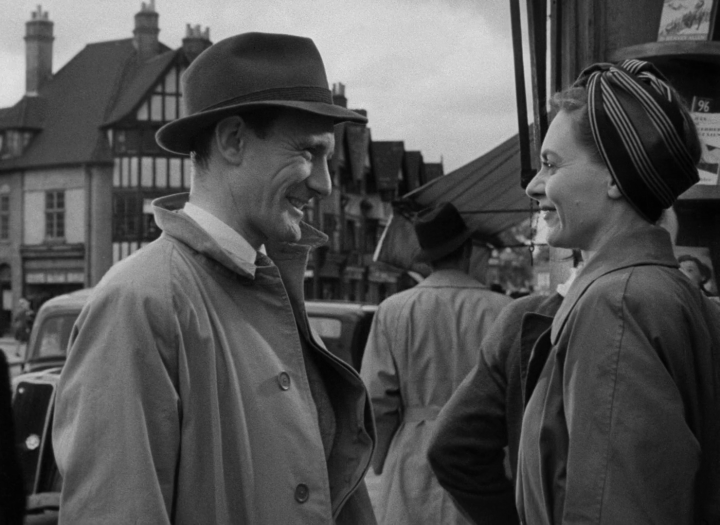
Director David Lean does a masterful job of tightly weaving this story together. I really liked the use of voiceovers and monologues which convey Laura’s conflicted state of mind. A couple of scenes stand out – one where she comes home wondering what to tell her husband, but breaks into a spontaneous laughter upon realizing his nonchalant attitude towards the whole thing. Another is when Laura makes her escape from the apartment, the camera chases her closely in the rain showing her panic and distress. Through such wonderful moments and a good script, Mr. Lean builds up the tension and our emotional involvement in the story; something that he would go on to use with stunning effect in a very different film – The Bridge On The River Kwai. ‘Brief Encounter’ won him his first of seven Oscar nominations in the ‘Best Director’ category – an award that he would go on to win twice.
Final Thoughts:

Brief Encounter may not be as famous as some of the other movies like Casablanca (1942) and Before Sunrise (1995) in this not-meant-to-be romantic sub-genre . Nonetheless, this nuanced romance from David Lean is highly recommended.
 Lights Camera Action
Leave a comment