

One of my favorite filmmakers is the duo of Joel and Ethan Coen. Better known as the Coen brothers, they are famous for several off-beat hits such as Fargo (1996), The Big Lebowski (1998) and No Country For Old Men (2007). Now an established name in Hollywood, their films are highly anticipated affairs and often feature A-list stars like Brad Pitt (Burn After Reading – 2007) and George Clooney (Hail, Caesar! – 2016). These movies, often satirical and quirky in nature are thoroughly enjoyable. Blood Simple – their directorial debut all the way back in the 80s – is no exception. However, in contrast to their recent blockbusters it is a very low key affair featuring (then) little known stars.
There’s a famous Tom Hanks quote from Forrest Gump (1995) – “Stupid is as stupid does”. Blood Simple is a movie filled with seemingly normal people doing stupid things. They do it for different reasons – out of arrogance, with an intent to deceive, to cover their own insecurities or simply for fun. And when people act stupidly, things are likely to go wrong. The opening lines of the movie stress this theme. The ‘Simple’ in the title of the movie is a slang for being crazed or obsessed. It means that once someone goes down a path (of killing in this specific case) they are only getting themselves deeper in it and the desired outcome may not be guaranteed. But unlike the characters in their movie, the Coen brothers make all of this work and bring order to the chaos that unfolds on screen. And when everything’s said and done, they come out looking like geniuses. Although the movie did not garner much attention during its initial theatrical run, it did receive critical acclaim and has amassed a cult following over the years.
Comments:
The plot of the movie is relatively straightforward. Marty, the owner of a bar somewhere in Texas, hires a private detective Visser to spy on his wife only to find out that she is cheating on him with one of his employees. Feeling humiliated, he decides to kill both his wife Abby and her lover Ray. Marty carefully lays out a plan and rehires Visser to do the killing. But he fails to account for the detective’s greed and stupidity. This unexpectedly sets off a catastrophic chain of events for everyone involved.

I really love the rural Texas setting in a movie. From a barn in the middle of nowhere to a neon-lit bar where half the town spends their evenings, the Texas countryside can at once provide a very alienating or cozy setting for a slow churning suspense. This small-town vibe where everyone-knows-everyone and secrets rarely stay hidden seems perfect for this plot. Besides the director duo’s latter hit No Country For Old Men, some of my other favorite films in this setting include Bonnie and Clyde (1967) and The Last Picture Show (1971).
A lot of unpredictable things happen throughout, mostly to comic effect. Humor pops out of nowhere when you prepare yourself for violence. Murder happens when you expect suspense or comedy. Several seemingly tense moments dissipate into comical mishaps and trivial scenes or conversations gain importance later on. The Coen brothers play this cat and mouse game with the audience all the way up to the climax. And you are not wrong for thinking that the whole movie and especially this elaborate final sequence has a cheap horror / slasher movie feel. That’s because prior to making their own movie, Joel Coen worked as an assistant editor for Sam Raimi on the famous Evil Dead franchise and was influenced by this particular style of filmmaking popular during the era. The final third of the movie is one big confusion of who-knows-what and who-did-what. Although the viewers are fully aware of what’s happening, the characters are not and their assumptions and actions based on what they think is the truth leads to even more chaos. A couple of conversations between Ray and Abby – over the phone and later in her apartment – are great examples of this. Each one’s thinking that the other person is speaking cryptically so as to avoid the topic they are trying to broach. But in reality they both have a completely different understanding of the situation.
The film may require a second viewing, not because it’s hard to follow but simply to understand and appreciate all the nuances. The importance and impact of many of the actions taken by the main characters may not be clear initially. But it all comes together eventually and makes for a rewarding viewing experience. Coen brothers’ mastery of their craft is evident even in their debut film, something that would only get better with time.
Cast and Crew:
This is also the debut film of 3x Academy Award winner1 Frances McDormand. She plays the role of Abby, the housewife who’s cheating on her husband Marty. Abby is scared of her psychopathic husband and wants to get away from him. John Getz plays her lover Ray. He is a charming simpleton with a semblance of conscience but who’s too brash for his own good. Although both protagonists have their flaws, they are overall decent people. On the other hand, Dan Hedaya plays Marty, a sleazy bar owner with a brooding personality. In addition to being a jealous and insensitive husband to Abby, he is often a mean boss to his employees.

Finally, M Emmet Walsh gives a memorable performance in the role of private detective Loren Visser. In film-noir lore, the private detective has a unique revered standing (see the iconic Sam Spade character). Typically, he is a straight shooter, often incorruptible and has the looks to seduce the femme fatale along with the fitness to chase the elusive crooks. But Mr. Emmet Walsh shatters that stereotype with his portrayal of a bumbling, ruthless and greedy detective. He has a twisted sense of humor and no moral compass. His delivery of some of the film’s iconic lines is at once hilarious and creepy. The brothers knew that Mr. Emmet Walsh was their guy when they approached him for the role and to their (and the audience’s) delight, he trusted these newcomers and accepted the role.
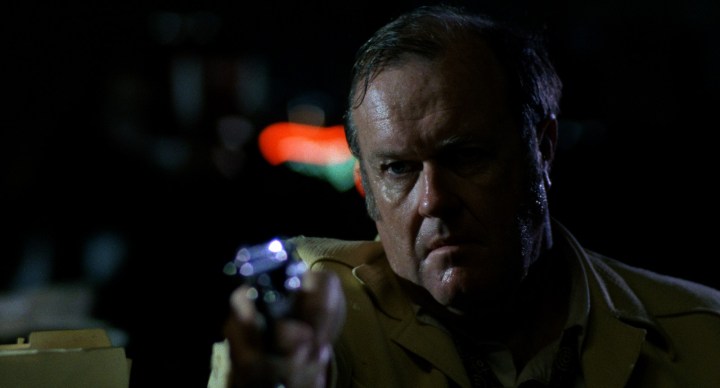
Despite this being their first feature length movie, the Coen brothers have not shied away from experimenting. The protagonists can best be described as neutral and it’s not easy to feel deeply sympathetic towards them. The movie features several lengthy scenes, some of which are completely devoid of dialogues. However, the buildup of the tension is such that it can be cut with a knife. Such gripping scenes are designed to make us forget how much the characters know and this leads to very unexpected outcomes. The accompanying soundtrack by Carter Burwell and Skip Lievsay is perfectly suitable and the main piano theme is especially catchy. In a movie that’s relatively quiet all throughout, the exaggerated sounds of a bug zapper or a newspaper hitting the glass door in the middle of conversations often adds to the tense mood. I also loved the camerawork of Barry Sonnenfeld. From the wide angle shots of a car in the middle of an open field to the tracking shots over the bar countertop and that of the investigator breaking in to Ray’s house, his cinematography and the scene transitions enhance the suspense throughout the film.
An interesting side note to wrap things up, this is the first of nine collaborations between Frances McDormand and Joel Coen – a real life couple. They met during the audition for Blood Simple and got married after the release of this film.
Final Thoughts:
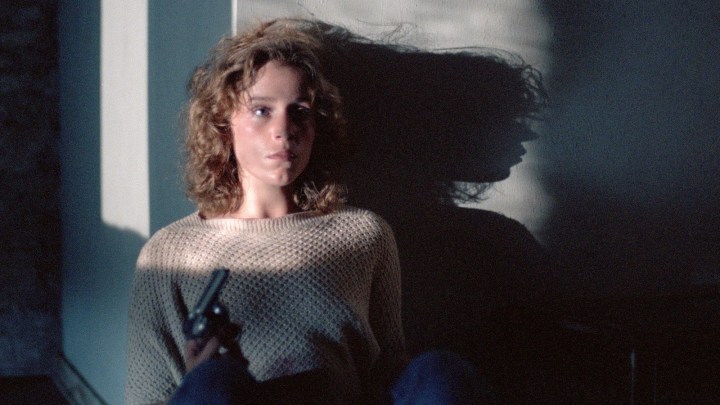
Blood Simple is a tightly paced crime thriller from indie film royalty Ethan and Joel Coen. Expect the unexpected at every corner and you will not be disappointed with this hidden gem.
1 Frances McDormand has won 3 Best Actress Academy Awards for Fargo (1996), Three Billboards Outside Ebbing Missouri (2017) and Nomadland (2020).
 Lights Camera Action
Leave a comment