

The first time I remember being blown away by a movie was while watching Shekhar Kapur’s blockbuster Mr. India (1987) as a 6 year old. It was the summer of 1987 and schools were out. K. C. Theater in Faridabad, India where the movie was playing, was overflowing with people. So much so that we had to wait in a nearby park for the next show because there was no place to even stand inside the hall (no reserved seating). Summers in northern India are brutal and between facing the hot sun in the park and being sandwiched among a few hundred people inside the theater (fire hazard anyone?), it was turning out to be a hellish day. But little did I know then that it was all about to change. As soon as the figurative curtain was raised, I was transported into another world – where kids my age sang and danced, the amazing Anil Kapoor romanced the sizzling Sridevi, a magical bracelet provided invisibility power to its wearer and the whole nation of India was under a serious threat from the maniacal ‘Mogambo’ played by Amrish Puri. It was a true roller coaster ride for my emotions – in a matter of 3 hours, I felt joy, fear, sadness, wonder and excitement. I was entertained like never before. If the late, great Stanley Kubrick were to make a movie about me, a monolith1 would appear in that very cinema hall on that very evening. Cinema had unleashed its power over me and there was no turning back.
Over the next several years while growing up in my hometown of Pune, India, movies formed an integral part of my life. From first day-first shows to last day-last shows, from good, meaningful cinema [Earth – 1947 (1998)] to waste of time cinema [Zamaana Deewana (1995)], I must have watched hundreds of movies at the cinema halls or at home with friends or family. Neelayam theater, the closest one to where I lived, was my go to destination until the multiplex rage hit India in early 2000s. The post of the doorkeeper at Neelayam (or batti a.k.a flashlight as people used to call him), who would get to watch all the hits multiple times, was a highly desirable potential career choice for me back then alongside that of a policeman and a train engineer.
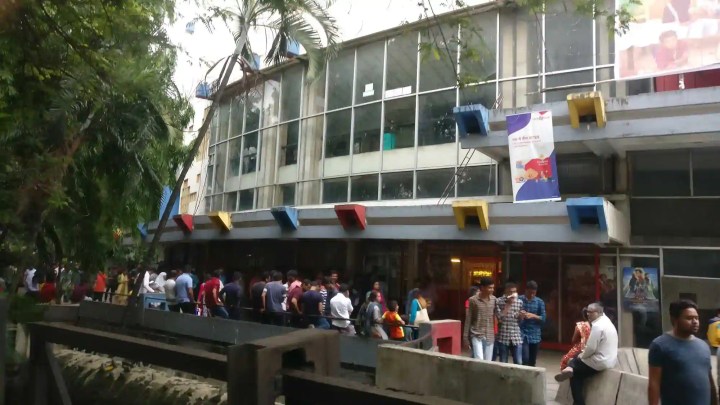

Two of the cinema halls in Pune, India which I used to frequent as a kid.
Although Hindi movies made up for the bulk of my childhood cinema experience, there was a generous sprinkling of regional Marathi language cinema, especially the comedies of Ashok Saraf and Laxmikant Berde. The historic Prabhat Theater in the heart of Pune city exclusively played Marathi movies. Watching a matinée here with cousins followed by the afternoon tea and snacks at my aunt’s place nearby still holds a special place in my heart. Similarly, English movies were a rare treat, mainly due to the absence of a theater that played those in my neighborhood. The first English movie I remember watching was the Rick Moranis starrer Honey, I Shrunk the Kids (1989). It was also my first time watching a movie at the posh ‘West End’ theater which was at the other end of the town. It was a night of many firsts – the first time I took an elevator instead of the usual staircases up to the movie screen, the first time a movie began AFTER the intermission2 and the first time I saw an on-screen kiss! Very quickly, ‘Honey, I Shrunk the Kids’ become the second, the third and the fourth English movie that I saw – it was seemingly playing everywhere – from home videos at friends’ place to even in our school! But alas, barring a few hits to grace our city like Jurassic Park (1993), Toy Story (1995), Titanic (1997) and American Beauty (1999), watching English movies in a theater remained elusive. It was not a lost cause however due to the advent of home video. I got my first taste of Star Wars, Indiana Jones and James Bond at one of my friend’s place as his family watched a lot of classic Hollywood movies. Also, I do remember watching the opening scene of a certain movie. It featured no dialogues and several primates fighting over water in a barren African landscape3.

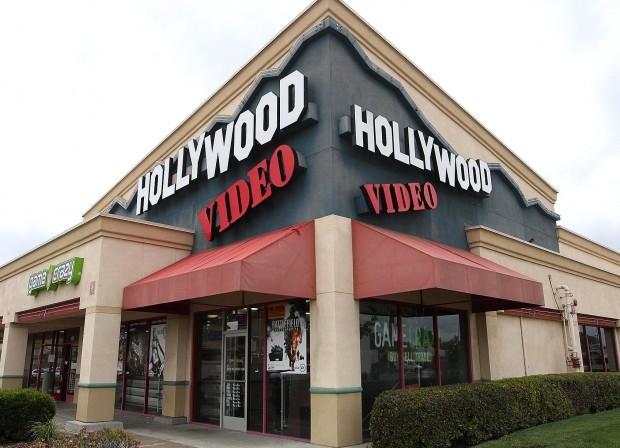
Fast forward several years and we segue into the summer of 2004. It had been one year since I arrived in the US to pursue my higher education. School was out again for the summer break and my roommates and I had just found out about this mail-in service named Netflix. Over the next two weeks, we ended up watching seven Tom Hanks movies – a list that included Philadelphia (1993), Forrest Gump (1994), Castaway (2000) and Road to Perdition (2002). I became an instant fan of the actor. The formidable combination of Tom Hanks and Netflix had opened up a whole new world to me. The second monolith4 had appeared. Over the next 3-4 years, I criss-crossed the country on several occasions because of my job. In this period of continuous change, the ‘Hollywood Video’ stores5 were one of the few constants. I had gotten a taste of good cinema and I wanted more. So with IMDb as my guide and Hollywood Video as my resource, I went on a movie watching spree. At one point, I had watched over 200 of the IMDb Top 250 list of movies.6 I became familiar with the works of several great artists – past and present – from all over the world. From Charlie Chaplin and Clara Bow to Christian Bale and Cate Blanchett, from Akira Kurosawa to Quentin Tarantino and from the rise of the studio era7 to the rise of streaming services8, it’s been quite a journey for world cinema and I have been privileged to experience the many flavors and milestones of this art form that I greatly admire.
I have never formally studied anything related to movie making, but my innate curiosity led me to explore its many under appreciated aspects. Movie watching for me is much more than the simple act of watching a movie. It is about feeling the emotions of the characters. It is about recognizing the nuances and interpreting the director’s vision. And while getting lost in the movie experience is paramount, it is also essential to appreciate how the people behind the silver screen create the magic that we see on it.
Anytime we meet our friends or family these days, the conversation frequently veers towards the movies or shows that we have watched recently. Content creation and consumption is probably at its highest. There are about 20 movies or shows lined up for release any given week, and that’s just on Netflix! And the irony of the situation is such that even with seemingly countless choices, we still spend a considerable amount of time looking for stuff to watch. Ultimately, the algorithms end up making the choice for us and often it may not be the best one. Due to their inherent nature, they rely on either recency bias or our subconscious confirmation bias and we may end up getting siloed into watching a specific type of content.
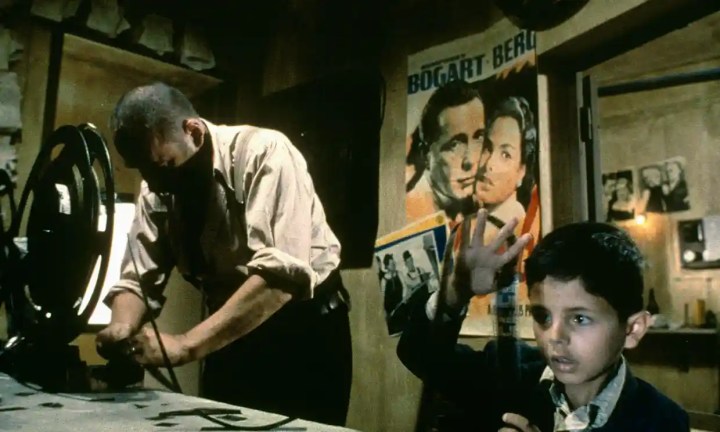
I started this blog with the intent of breaking down these silos and to promote great content that would otherwise fly under the radar. I feel that getting exposed to a different kind of cinema than one would typically watch is a good thing. Sure, you may not like it on the first attempt. But given time, you may develop an appreciation of the style. It’s okay to dislike a genre, but give it a fair chance and do it for the right reasons. Typically, there is a resistance to watching foreign films (subtitles), or black and white movies and classics (outdated techniques and narratives) or musicals (lack of plot). Here is where picking the right movie comes in. A foreign film like Cinema Paradiso (1988) (you can ready my review here), a black and white thriller like Double Indemnity (1944) or a musical masterpiece like The Sound of Music (1965) is easy to appeal to almost everyone. Once you are drawn into the genre, you may then find it easier to explore similar titles.
I feel that quality is not entirely subjective. Marvel movies, with their stunning special effects, are admired by hundreds of millions of fans the world over. But it does not mean that they are better than Orson Welles’ Citizen Kane (1941 or Fritz Lang’s Metropolis (1927) which presumably have a significantly less following these days. Marvel movies prioritize visual effects over storytelling and rely on the audiences to shell out money by sticking to their proven superhero formula. On the other hand, both Mr. Welles and Mr. Lang not only made groundbreaking movies that bent the established rules and revolutionized the art of movie making, they also had powerful stories to tell. A good script in the hands of a capable director is the single most important ingredient for a wholesome movie experience.
Knowledge is power and context matters. Think of the ‘Mona Lisa’ – Leonardo da Vinci’s renaissance masterpiece. With its innovative sfumato technique and the use of aerial perspective to create a sense of depth, it is rightfully heralded as the greatest painting ever. But to a casual visitor to the Louvre, it appears as a smallish painting behind a highly reflective protective glass pane. Similarly, watching an old classic through the contemporary lens will not provide the full context to the viewer and hence it remains under appreciated.
I hope my blog will prove to be a monolith9 in your movie watching experience. Happy watching!
1,3,4,9 For the uninitiated, all this talk of the monolith and primates refer to the memorable opening sequence of Stanley Kubrick’s masterpiece, ‘2001, A Space Odyssey‘.
2 In India, Bollywood movies, tend to have an intermission in the middle of the movie due to their lengthy runtime. English movies had this break right after the promos and before the movie started for an uninterrupted movie experience.
5 Hollywood Video was a brick-and-mortar chain of video rentals in direct competition with Blockbuster video.
6 IMDb Top 250 List is a dynamic list of Top 250 movies in the world as rated by its readers / voters. The current list can be found here.
7 Reference: Encyclopedia Britannica
8 Reference: The New York Times

 Lights Camera Action
Leave a reply to Rajesh Bhatawadekar Cancel reply